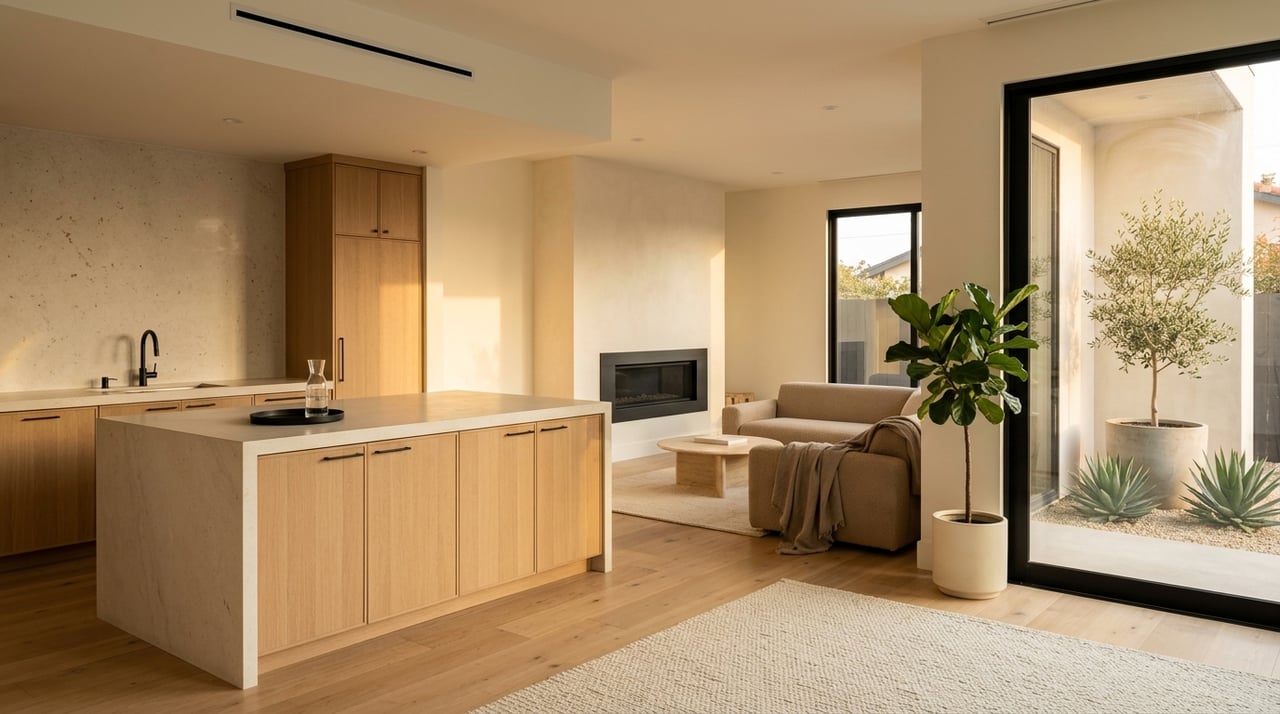
If your home fits your life less than it used to, you are not alone. In Claremont, many homeowners reach a point where they want less upkeep, fewer stairs, or a simpler layout, but they do not want to give up the routines and places that make the city feel like home. The good news is that downsizing here does not have to mean stepping away from the lifestyle you love. With the right plan, you can trade space for ease while staying connected to Claremont’s walkability, parks, Village setting, and daily convenience. Let’s dive in.
Why Claremont Works for Downsizing
Claremont offers a rare mix of community amenities and housing variety in a relatively small Southern California market. The City reports a population of 35,640, a 65.5% homeownership rate, 21 city-owned parks, 2,534 acres of public parkland, and 231 miles of sidewalks. It also reports that 19.8% of residents are age 65 and older.
That matters because downsizing is often about keeping access, not just cutting square footage. Claremont includes single-family homes, condominiums, townhouses, and apartments, which means you can look for a lower-maintenance home without assuming you need to leave town. If your goal is to stay close to familiar routines, Claremont gives you real options.
The city’s lifestyle appeal is another reason this move can work well here. The historic Train Depot serves as both a Metrolink stop and a Foothill Transit bus stop, and the depot sits within walking distance of the Village shopping district. The Claremont Colleges also describe the area as a strollable college town with a Village downtown, farmers market, festivals, concerts, trails, bike lanes, and a Metrolink connection.
Start With the Lifestyle You Want to Keep
Before you look at floor plans, start with your daily life. Downsizing works best when you protect the routines that matter most to you, whether that means morning walks, easy errands, community events, or less time spent on yard work. A smaller home should support your lifestyle, not shrink it.
Ask yourself a few simple questions:
- Which places do you visit every week?
- How important is walkability to your day-to-day routine?
- Do you want to keep outdoor space, or reduce it?
- Are stairs becoming a concern?
- Do you want more convenience, more privacy, or a balance of both?
These answers can help you focus on the right part of Claremont. In many cases, the best downsizing move is not the smallest home. It is the home that gives you the easiest version of the life you already enjoy.
Claremont Neighborhood Types to Consider
Village and Historic Claremont
If you want character and proximity to the heart of the city, Village and Historic Claremont deserve a close look. The Village is Claremont’s central business district, and the City’s design guidelines note its long history, civic importance, and pedestrian focus, especially east of Indian Hill where many structures sit close to the sidewalk. That design supports a more walkable, connected daily routine.
Historic Claremont is the city’s oldest neighborhood, with homes dating from the 1890s through the 1940s. It sits near Pomona College, Memorial Park, the downtown area, and the Village. For some downsizers, this area preserves the Claremont experience best because it keeps you close to the places and patterns that define life here.
Claremont Club
If lower maintenance is your top goal, the Claremont Club area stands out. The City describes it as a neighborhood that grew from a tennis club and later added townhouses and condominiums in a park-like setting with small parks, curved streets, cul-de-sacs, and moderate setbacks. The neighborhood vision specifically notes that the townhomes and condos offer ownership without extensive yard maintenance.
That makes this area especially useful to homeowners who want to simplify upkeep while staying in Claremont. If you are ready to spend less time managing a yard and more time enjoying the city, this is one of the clearest local examples of that trade.
North Claremont and Claraboya/Highpoint
Some downsizers still want space, privacy, or views, even if they want less work overall. North Claremont includes larger lots, one- and two-story homes, winding streets, cul-de-sacs, sidewalks, trails, and access to several parks. The Thompson Creek Recreation Trail forms its northern edge, which may appeal if outdoor access remains important.
Claraboya and Highpoint offer a different setting. The City describes this hillside area as mostly single-story homes arranged on terraces for unobstructed Pomona Valley views, but it also notes the lack of sidewalks and a more car-oriented street pattern. If your priority is a scenic setting over walkability, this may still fit your downsizing plan.
Smaller Home, Same Lifestyle
A common fear is that a smaller home will feel like a smaller life. In Claremont, that is not necessarily true. If your next home keeps you near the Village, parks, trails, transit, or familiar errands, you may find that your lifestyle stays intact while your maintenance load drops.
This is where location matters more than raw size. A well-placed condo, townhome, or smaller single-family home can support the same routines with less cleaning, less yard care, and less ongoing repair. For many homeowners, that is the real win.
What to Compare Beyond Square Footage
When you downsize, it is easy to focus too much on the number of square feet. In practice, your day-to-day experience depends on much more than that. Layout, condition, stairs, storage, outdoor space, and location often matter just as much.
As you compare options, pay attention to:
- Maintenance needs: yard size, exterior upkeep, and aging systems
- Layout efficiency: how well the space functions for your routine
- Mobility factors: single-story living, stair count, and ease of access
- Storage: whether the home can hold what you truly want to keep
- Location fit: distance to the Village, parks, trails, and transit
- Condition: whether the home is move-in ready or likely to need updates
These details affect both comfort and value. They also shape how sustainable the move feels two, five, or ten years from now.
How Value Works When You Downsize
Many sellers assume a smaller home must be worth less in every meaningful way. That is not how valuation works. Fannie Mae says an appraisal is an independent value opinion based on the home’s condition and characteristics, along with external factors such as location and market trends. Its guidance lists square footage, bedroom and bathroom count, overall condition, landscaping, location, views, comparable sales, and broader market conditions as value drivers.
Freddie Mac adds an important layer to that idea by noting that quality of construction and condition of improvements are separate ratings. If those differences are not measured accurately, value adjustments can be wrong. In plain terms, size matters, but it is only one piece of the picture.
That is especially relevant in Claremont. In March 2026, the citywide median sale price was $1.0915 million and the median sale price per square foot was $544. Recent neighborhood snapshots showed the Village at $815,000 and $454 per square foot, the Claremont Club at about $612,500 and $459 per square foot, North Claremont at $1.1 million and $588 per square foot, and The Claremont Colleges area at $1.5 million and $706 per square foot.
Those numbers suggest that product type, location, and condition can materially affect value. That does not create a universal rule for every home, but it does show why square footage alone does not tell the whole story. A smaller home in a strong location with appealing condition may compete very well against a larger home that needs work.
Prepare Your Current Home for a Stronger Outcome
If you are selling first, your current home’s condition still plays a major role in the move. Deferred maintenance, incomplete repairs, and unclear upgrade history can affect how buyers respond and how value is supported. A clean, well-documented property position usually creates more confidence.
This does not always mean a full remodel. It means understanding which improvements matter, which repairs should not wait, and how to present the home in a way that aligns with the market. When pricing and preparation are grounded in valuation logic, you reduce guesswork and make better decisions.
Plan the Transition With Clarity
Downsizing is part real estate move and part life edit. The process becomes easier when you break it into steps and make each decision on purpose. You do not need to solve everything at once.
A practical downsizing plan often looks like this:
- Identify the routines and amenities you want to keep.
- Decide how much maintenance you truly want to reduce.
- Narrow your search by neighborhood type, not just home size.
- Evaluate layout, condition, and access features carefully.
- Prepare your current home with pricing and value support in mind.
- Build a timeline that gives you room to sort, sell, and move without unnecessary pressure.
This kind of planning helps you protect both lifestyle and equity. It also makes the move feel less reactive and more strategic.
Why Appraisal Insight Matters
In a downsizing move, you are often making two major financial decisions at once. You are selling one property and buying another, and both sides of that equation involve value. That is why appraisal literacy can be so helpful.
If an appraisal comes in below contract price, Fannie Mae notes that buyers and sellers may renegotiate, request a reconsideration of value, increase the down payment, or walk away depending on contract terms. For downsizers, that means documentation, condition, and comparable sales matter more than many people realize. A clear valuation strategy can help you price your current home wisely and evaluate your next purchase with more confidence.
Keep the Best Parts of Claremont
The best downsizing move is not about giving things up. It is about keeping the parts of Claremont that still add value to your life while reducing the parts of homeownership that feel heavy or unnecessary. In a city with parks, sidewalks, housing variety, a walkable Village, and transit connections, that goal is very realistic.
If you are considering a move, the key is to match the home to the life you want next. That means looking beyond square footage, weighing neighborhood trade-offs honestly, and making decisions with a clear understanding of value. When you do that, downsizing can feel less like a loss and more like a smart reset.
If you want help evaluating your options in Claremont with a valuation-led strategy, The Mowery Group can help you plan your next move with clarity.
FAQs
What makes Claremont a good city for downsizing?
- Claremont offers a mix of single-family homes, condominiums, townhouses, and apartments, along with 21 city-owned parks, 2,534 acres of public parkland, 231 miles of sidewalks, and a walkable Village area that helps many homeowners stay connected to their routines.
Which Claremont neighborhoods best support a lower-maintenance lifestyle?
- The Claremont Club is one of the clearest lower-maintenance ownership options because the City specifically notes that its townhomes and condos offer ownership without extensive yard maintenance.
Is Village Claremont a good fit for downsizers who want walkability?
- Village and Historic Claremont may appeal if you want to stay close to downtown, Memorial Park, and other central amenities, with a more pedestrian-oriented setting and homes near the city’s core.
How should Claremont homeowners compare a condo, townhome, and smaller house?
- Focus on maintenance needs, layout efficiency, stairs, storage, condition, and location, since the best downsizing choice is usually the one that supports your daily routine with less upkeep.
Does a smaller Claremont home always have a lower value?
- No. Appraisal guidance shows that value depends on multiple factors, including condition, location, views, comparable sales, and market trends, not just square footage.
Why does home condition matter when downsizing in Claremont?
- Condition can influence buyer interest, pricing support, and appraisal results, which is why repairs, upgrades, and clear documentation often matter when you are trying to unlock equity from your current home.